
An inspiring day with Salvador Rueda
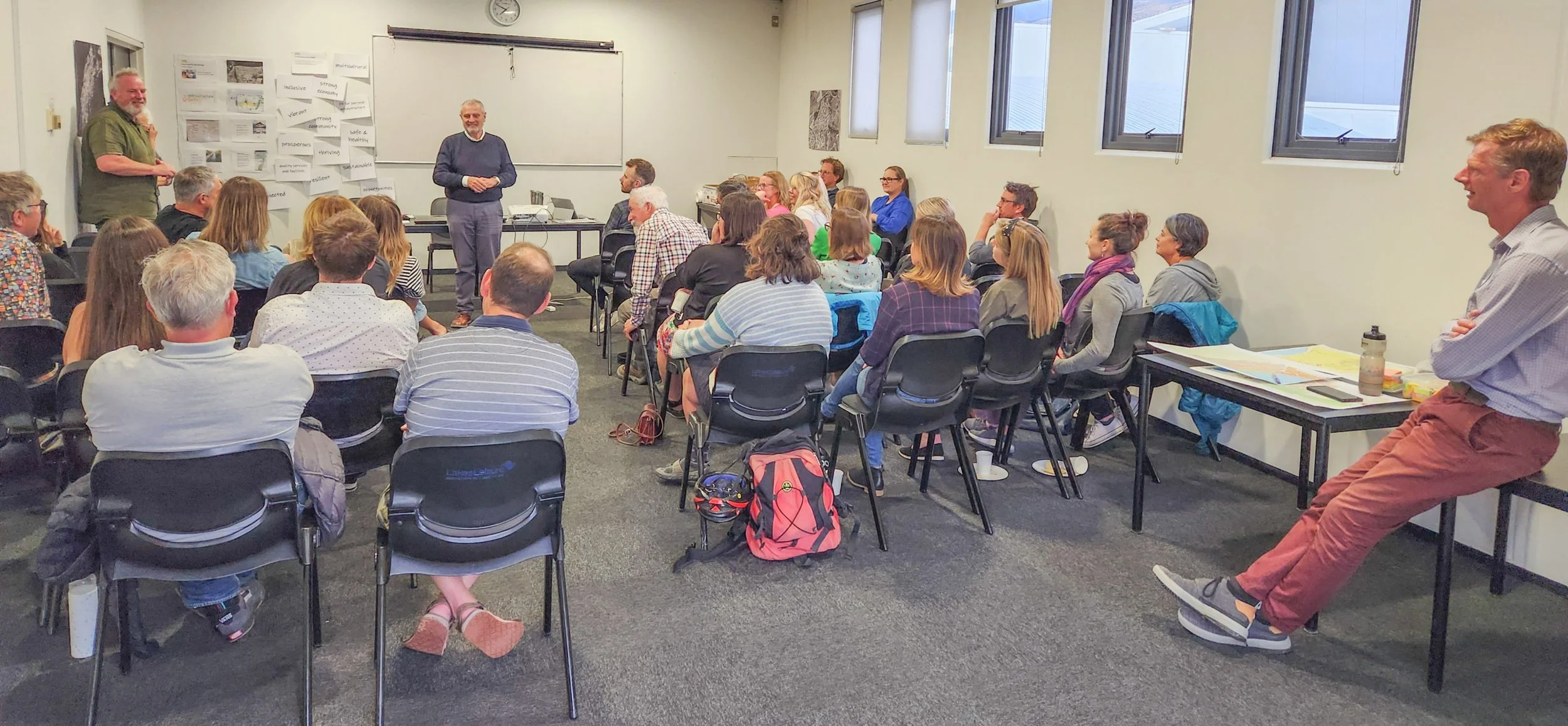
A few months ago, Otago Regional Councillor Alexa Forbes emailed us that a renowned European urban planner/designer who had made legendary changes in Barcelona was coming to New Zealand and together we invited him down to Queenstown to see if we could learn anything.
Our idea was to tour an old, a medium-old and a new suburb, so we took Salvador and Australian urban geographer Marco Amati around Fernhill/Sunshine Bay, Lake Hayes Estate & Shotover Country and Hanleys Farm.
We invited Queenstown locals, councillors & council staff to an evening public workshop to hear his reflections as well as a Q&A and a typical Shaping Our Future session with Post-It notes and wall charts. We could have carried on for hours – after all Barcelona is the city that put AirBnB back in its cage and we didn’t even get to talk about that.
Salvador's background and philosophy
Salvador is most well-known for his Barcelona based “Superblocks theory” where you manage traffic around and within urban areas to dramatically reduce speed and number of vehicles within the blocks, which allows the ‘citizens’ who live there to repurpose the spaces for other things like playing with kids, conversations, fresh air, cafés/bars.
He’s achieved huge change in a whole raft of other areas – primarily by leading and taking support from those who live in the community.
Here's a link to video documentary introducing Salvador, his background and philosophy. It’s 27 minutes long with subtitles but well worth the watch.
What Salvador saw on his visit to Queenstown
Salvador stayed in the downtown Queenstown bay area and got to experience ZQN Tourism Inc in full HD. He went up the Gondola with Skyline's sustainability lead staffer, met with the Destination Queenstown CEO for a Regenerative Tourism 101 then toured Fernhill/Sunshine Bay, Hanleys Farm and Lake Hayes Estate/Shotover Country accompanied by ORC Councillor Alexa Forbes.
Salvador has an amazing ability to comment on the minutiae of bus lanes in one breath then without any sense of a non sequitur move on to something like human species extinction.
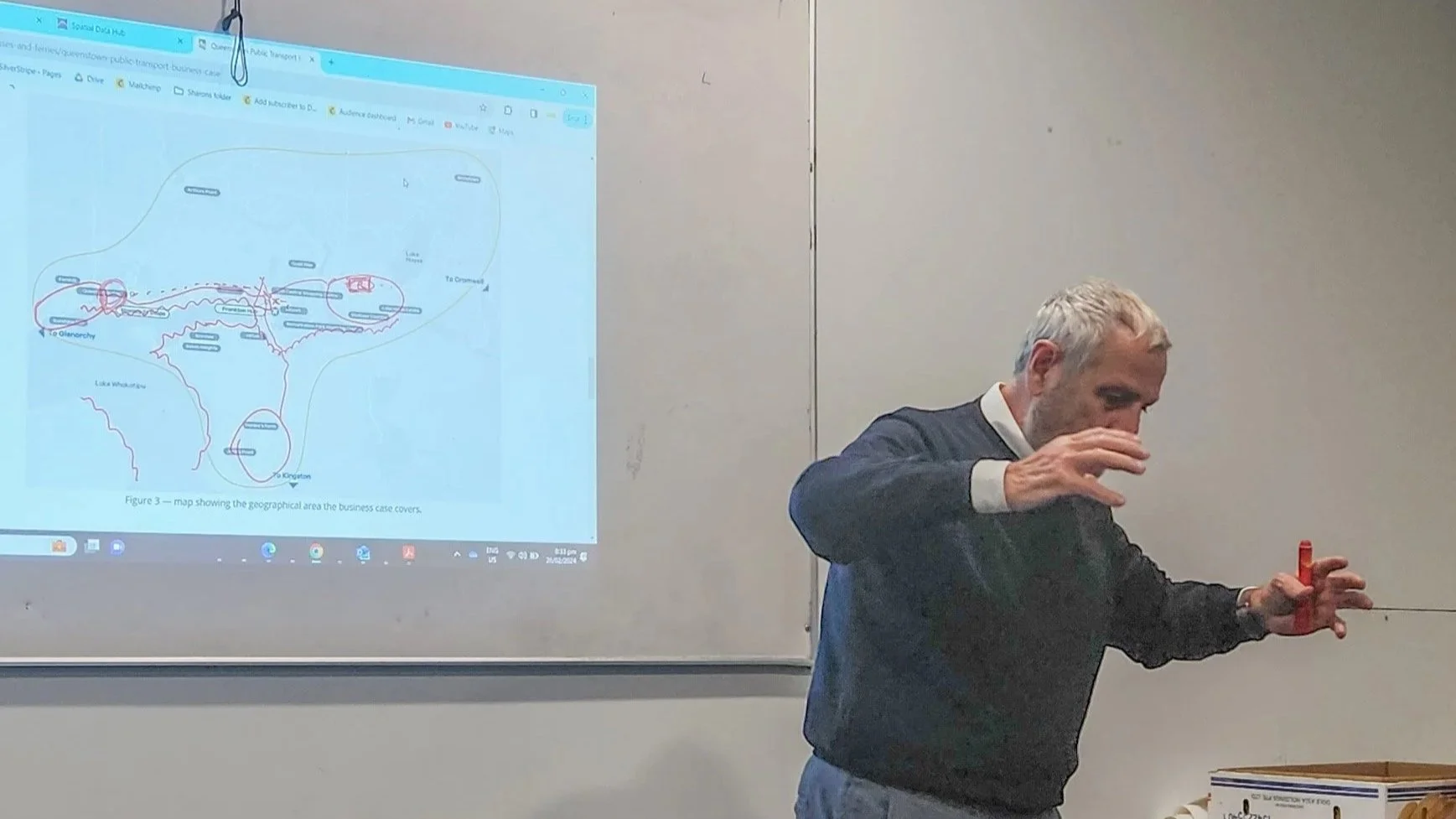
Key reflections from Salvador
We have large wide streets on our subdivisions that are under-utilised and quite sterile.
Our subdivisions are very one dimensional – there is no provision for community facilities / activities / commercial activities and services.
Our urban sprawl and car centric approach to new subdivisions is rooted in 1980s design principles.
We need to densify close to the centre.
Frankton Road is sufficiently wide to have a single dedicated central bus lane as used elsewhere in the world.
We need to reclaim the downtown Queenstown area.
“The CBD is beautiful don’t give it away to visitors only, allow residents to enjoy its beauty.”
Dismay at our over-reliance on tourism.
At all costs we must protect our lake.
We have land, the ability to feed ourselves, generate energy and ample water supplies so we can do anything we want.
We will be a place of great demand by climate refugees, and we have the opportunity to shape how that occurs.
We must use less energy as a species or we will become extinct.
Take aways from the discussion
Here’s what people told us after attending the session and meeting Salvador.
“We found it really interesting – it was just a shame we ran out of time!”
“It was refreshing to hear from an urban designer-ecologist that had created positive social, environmental and built form change in a city that is rated very highly on the one of the most attractive and walkable cities on the planet.”
“To hear a fresh eyes critique on how we are being quite wasteful with our land planning practices, going with an American suburb model rather than a compact city-urbanism model and not prioritising more sustainable transport alternatives like public transport is reaffirming that Queenstown Lakes is potentially heading down a track of further problems with even more unreliable transport network, unabating housing affordability resulting in potentially disenfranchised communities.”
“Every place is different – we aren’t Barcelona but can adopt some of the strategies we heard about. Elements of it are still relevant in terms of modelling to minimise trips, creating hubs in each suburb to reduce commutes and needless time in cars to complete basic tasks. Density, diversity and placemaking are key to creating well-functioning urban environments.”
“The inhabitants of a neighbourhood are citizens, with rights to a standard of living and the connected environment needs to be part of the system design.”
“If Congestion and Parking is what is keeping residents away, solve this with efficient public transport. Efficient public transport should be as fast as it takes to drive with no congestion, but all of the time, if public transport just puts you back into congestion why would you use it.”
“Queenstown has very delineated areas, i.e. major housing suburbs within Southern and Eastern Corridors for example, Commercial and Industrial in Frankton and tourism attraction places (with mixed use) predominantly in Queenstown Town Centre and Arrowtown – this means everyone needs to travel (usually by car) to get somewhere (even though most of these locations are one road in, one road out.”
And what about the Post-It notes?
Part way through the evening session we asked attendees to look at aerial images of the three suburbs and mark up what could be changed a-la-Salvador. What did they come up with?
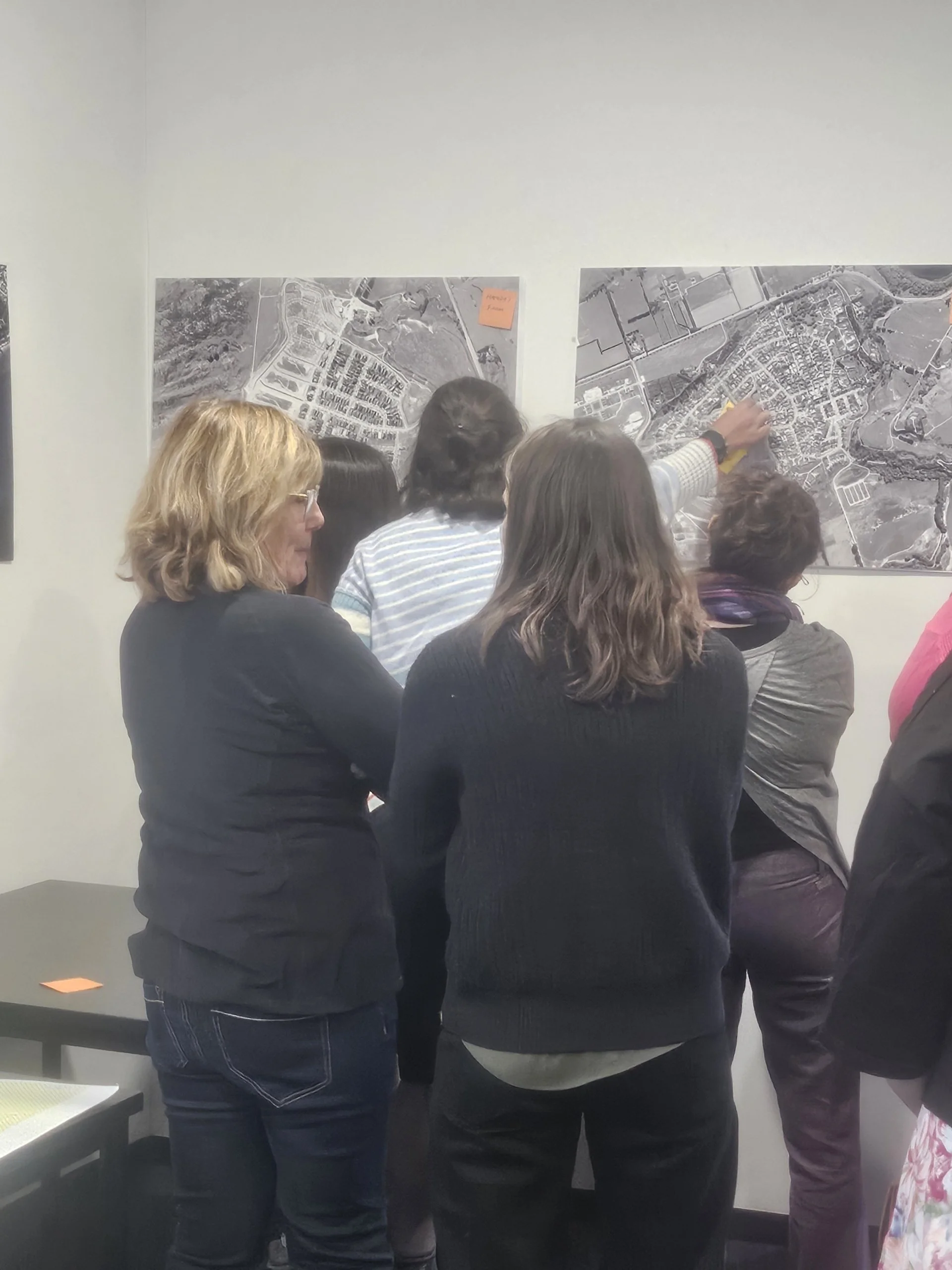
Fernhill – Central park, community hall, hotel with public pool & spa facilities
Shotover Country – Bus service, more businesses, local work
Lake Hayes Estate – Speed limit reductions, turn the roundabout into a functional space, central high-density hub with ground-floor businesses, community centre, sports facilities, activities centre.
Hanleys Farm – statement and boulevard trees, less engineered stormwater, trails to Frankton & local summit, public spaces, integration with Jacks Point.